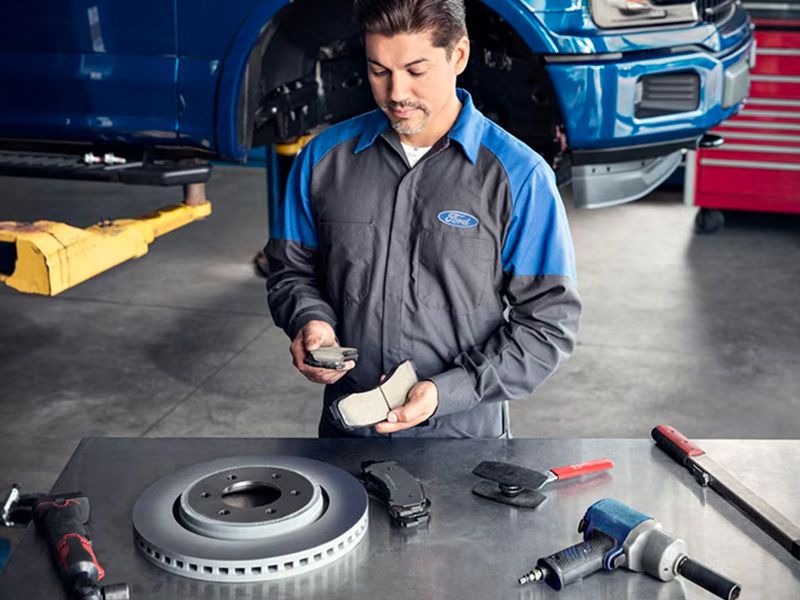
What Is the Ford Tremor Trim?
If you've been shopping for a Ford truck or SUV and come across the Tremor name, you may be wondering exactly what it means and what it adds to the...
Read more
Élite Ford St-Jérôme
2175 Boulevard du Curé-Labelle, Saint-Jérôme, QC, J7Y 1T4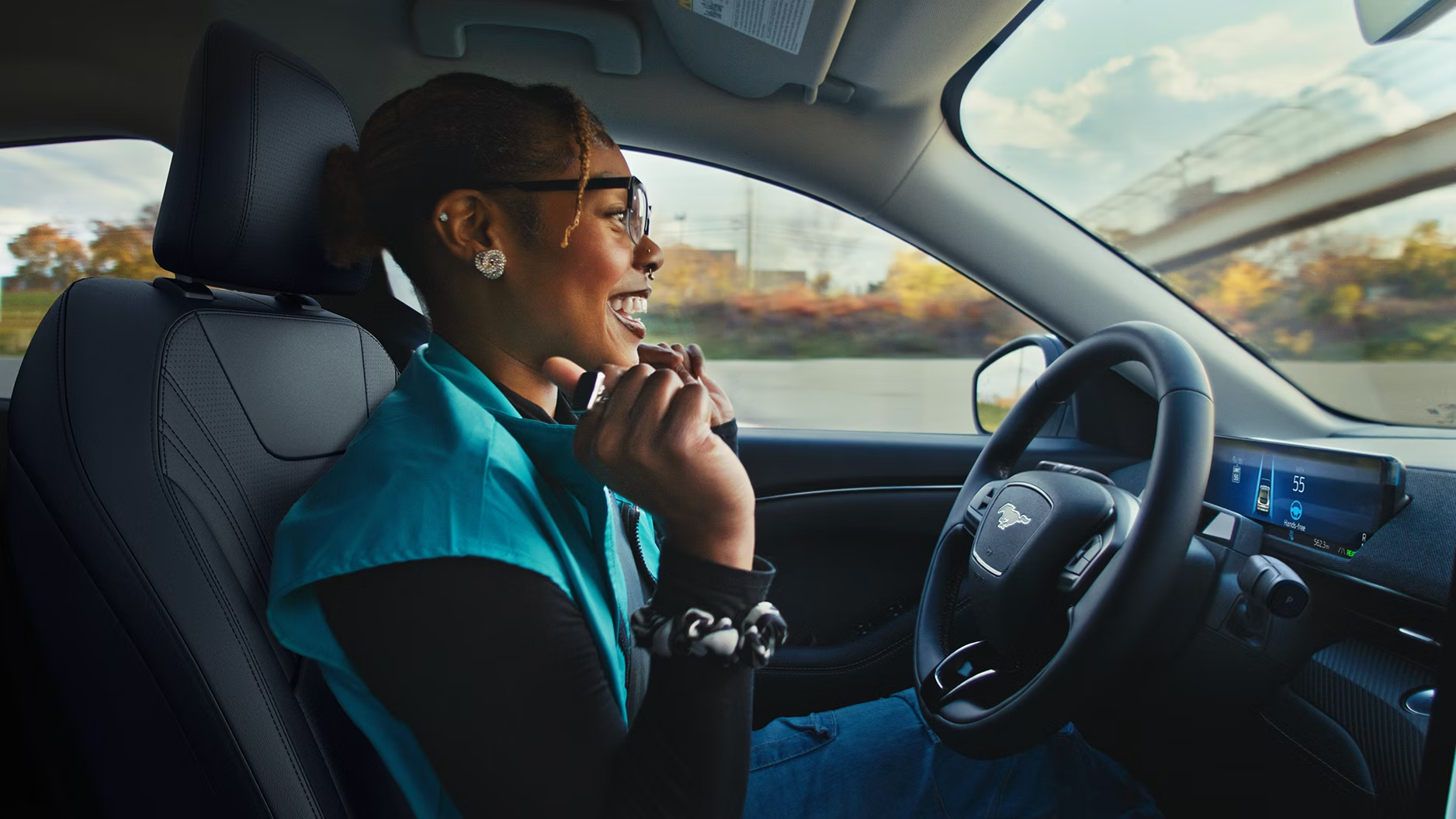
Ford BlueCruise is one of the most talked-about driver assistance technologies available on new Ford vehicles today, and for good reason. It represents a genuine step forward in hands-free highway driving, offering a level of convenience and capability that drivers who experience it tend to find difficult to give up. But what exactly can you do with BlueCruise, and what makes it different from conventional driver assistance features? Here are ten things BlueCruise enables, explained clearly and in practical terms.
The defining capability of BlueCruise is the ability to drive with your hands completely off the steering wheel on pre-mapped, pre-qualified divided highways across North America. Ford has mapped hundreds of thousands of kilometres of highway in Canada and the United States that the system has determined are suitable for hands-free operation, referred to as Hands-Free Blue Zones. When you're on one of these roads and conditions are met, BlueCruise takes over longitudinal and lateral control, managing speed and steering while you keep your eyes on the road.
This is not cruise control with a few extra features. It is a genuine hands-free driving experience on appropriate roads, backed by a sophisticated sensor suite and continuous driver monitoring.
BlueCruise incorporates Adaptive Cruise Control, which continuously monitors the vehicle ahead and automatically adjusts your speed to maintain a safe following distance. If the vehicle ahead slows, BlueCruise slows with it, smoothly and progressively, without requiring any driver input. When the vehicle ahead speeds up or clears, BlueCruise returns to your set speed. The result is a significantly more relaxed highway experience, particularly in moderate traffic where speed adjustments are frequent.
Beyond managing speed, BlueCruise actively steers the vehicle to maintain lane centring using camera and radar data to continuously track lane markings. The system makes small, smooth steering corrections to keep your Ford centred in its lane throughout the drive. This lateral control is what elevates BlueCruise beyond standard adaptive cruise control, it manages both dimensions of highway driving simultaneously.
BlueCruise includes low-speed following capability, which means the system remains active even in slowing or stopped highway traffic. If the vehicle ahead brakes to a stop, BlueCruise will bring your vehicle to a complete stop as well. When traffic begins moving again, the system resumes automatically, or with a light tap of the accelerator if the vehicle has been stopped for longer than a few seconds. For anyone who has experienced the fatigue of crawling through highway construction zones, this feature alone is worth appreciating.
On compatible trims and with available updates, BlueCruise works in conjunction with Ford's lane-change assistance features, which can suggest or execute lane changes based on navigation routing and traffic conditions. The system monitors adjacent lanes for safe gaps and assists with the manoeuvre when conditions allow, taking some of the cognitive load out of highway lane management.
One of the most important, and often underappreciated, aspects of BlueCruise is its infrared driver-facing camera, which monitors the driver's face and eye direction continuously while hands-free mode is active. The system ensures that even though your hands are off the wheel, your attention remains on the road ahead. If the camera detects that you're looking away for too long, BlueCruise issues progressive alerts, visual, audible, and haptic, to redirect your attention. If you fail to respond, the system will slow the vehicle and ultimately bring it to a stop.
This monitoring system is what makes hands-free driving genuinely responsible rather than simply convenient. BlueCruise is designed to assist an attentive driver, not replace one.
BlueCruise is a connected, software-based system that receives updates over the air, meaning Ford can improve its capabilities, expand its pre-qualified Blue Zone highway map, and refine its performance without requiring a dealer visit. Your BlueCruise system on the day you buy your vehicle is not its final form. It gets better over time, automatically, in a way that traditional vehicle technology never could. This is one of the most meaningful advantages of Ford's connected vehicle platform and one that owners consistently appreciate as the system evolves.
BlueCruise is not exclusive to one vehicle, it is available across a growing range of Ford and Lincoln vehicles, including the F-150, Mustang Mach-E, Ford Explorer, and others. This means the hands-free highway driving experience is accessible whether you drive a full-size pickup, an electric SUV, or a family hauler. Each implementation is tailored to the vehicle's specific platform, but the core BlueCruise experience and capability remain consistent across the lineup.
BlueCruise integrates with Ford's SYNC navigation system, which means the vehicle's mapping data and your route information work together with the driver assistance system. As you approach a pre-qualified hands-free highway segment, the system can prepare to engage BlueCruise automatically. As you approach the end of a Blue Zone, an interchange, a non-qualified section, or an urban area, the system provides advance notice and a smooth handoff back to the driver. The integration makes the transition between assisted and unassisted driving feel natural rather than abrupt.
Perhaps the most tangible everyday benefit of BlueCruise, the one owners mention most consistently, is how significantly it reduces driver fatigue on long highway drives. Managing speed, maintaining following distance, and making continuous micro-corrections to stay centred in a lane are all cognitively and physically demanding tasks, even when they feel automatic. BlueCruise handles all of them simultaneously, allowing the driver to remain alert and attentive without the accumulating physical tension that long-distance highway driving typically produces. After a two-hour highway run with BlueCruise active, drivers consistently report arriving feeling notably less tired than they would have otherwise.
BlueCruise represents a meaningful step forward in how Ford vehicles support their drivers, not by removing the driver from the equation, but by intelligently sharing the workload on appropriate roads. It is one of the most compelling reasons to consider a new Ford vehicle equipped with Ford's latest technology package.
Visit Elite Ford to find out which models in our current inventory are equipped with BlueCruise, and let our team walk you through how the system works firsthand. Some technologies are best understood behind the wheel, and BlueCruise is absolutely one of them.
What Is the Ford Tremor Trim?
If you've been shopping for a Ford truck or SUV and come across the Tremor name, you may be wondering exactly what it means and what it adds to the...
Read more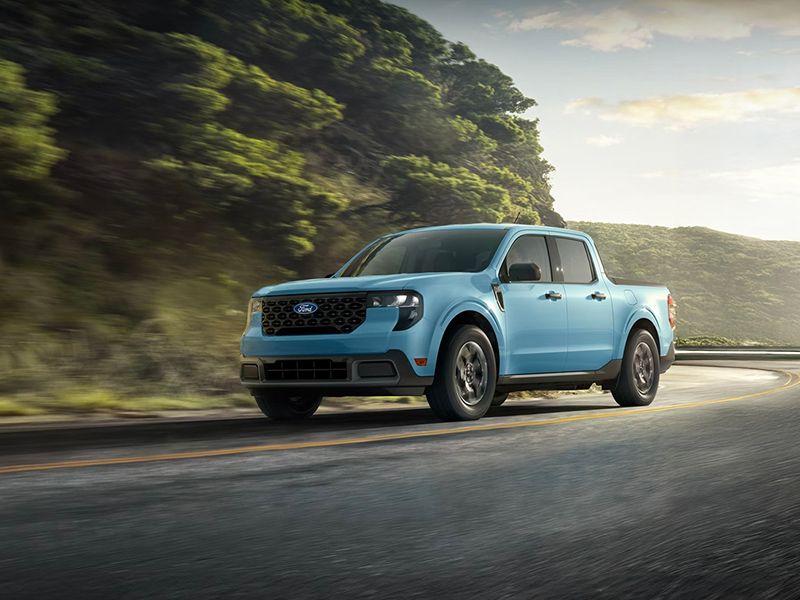
Key Differences Between the 2026 Ford Maverick 2.0-Litre Engine and the Hybrid Powertrain
The Ford Maverick is one of the most talked-about compact pickups on the market, and a big part of what makes it so versatile is the choice between...
Read more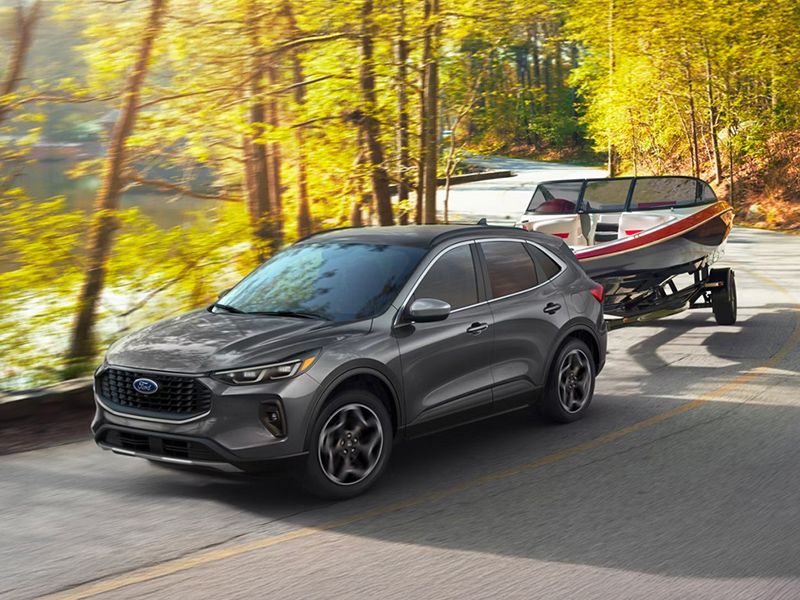
Why Buy a 2026 Ford Escape?
The Ford Escape has long been one of the most popular compact SUVs on the market, and the 2026 model year gives drivers more reasons than ever to...
Read morePowered and developed by
